Curved, Scarred, or Simply Different: A Clinical Guide to Understanding Peyronie's Disease
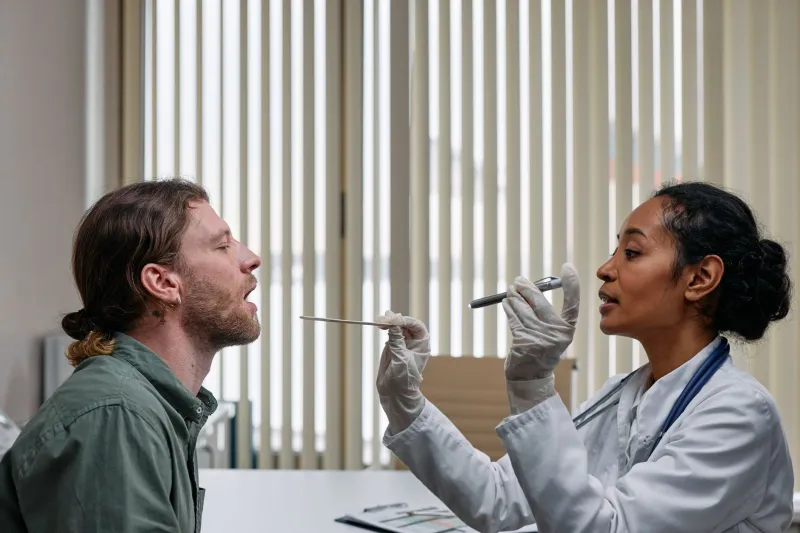
For many American men, the shape of their erection is something they have never discussed with a physician, a partner, or even a close friend. Cultural discomfort around the male anatomy runs deep, and that silence carries a real clinical cost. Men living with significant penile curvature often delay evaluation for years — sometimes decades — while pain, sexual dysfunction, and psychological distress quietly compound.
The central question this article addresses is deceptively simple: when does penile curvature represent normal anatomical variation, and when does it cross into a condition that warrants medical attention? The answer requires a working understanding of Peyronie's disease — what it is, how it develops, and what the current evidence actually supports in terms of treatment.
What Normal Variation Actually Looks Like
It bears stating plainly: a perfectly straight erection is not the anatomical standard. Studies consistently demonstrate that mild curvature — generally defined as less than 30 degrees of deviation in any direction — is present in a meaningful percentage of men and is not associated with functional impairment or underlying pathology. Curvature present from adolescence onward, stable across time, and unaccompanied by pain or palpable tissue changes is almost certainly a natural variation in structure rather than a disease process.
The distinction matters because unnecessary anxiety about normal anatomy is itself a clinical problem. Men who fixate on minor curvature they have always had may develop performance anxiety, avoidance behavior, and relationship strain — none of which is warranted by their physiology.
The Biology of Peyronie's Disease
Peyronie's disease is a fibroproliferative disorder of the tunica albuginea — the dense connective tissue sheath surrounding the erectile bodies of the penis. The condition is estimated to affect approximately 0.5 to 13 percent of American men, with prevalence rising significantly after age 40. That wide range reflects genuine diagnostic variability and the well-documented tendency of affected men to underreport symptoms.
The initiating event is typically penile microtrauma — most commonly occurring during sexual activity when the erect penis is subjected to abnormal mechanical stress. In men with a genetic predisposition toward disordered wound healing, this trauma triggers an exaggerated inflammatory response. Fibrin deposits accumulate. Myofibroblasts infiltrate the injury site. Over weeks to months, collagen is laid down in a disorganized pattern, ultimately forming a plaque — a firm, non-cancerous scar — within the tunica albuginea.
It is this plaque that drives the condition's hallmark features. Because scar tissue does not expand the way healthy tunica does during erection, it creates a tethering effect. The penis curves — or in some cases, develops an hourglass-like narrowing — in the direction of the plaque as tumescence occurs.
Recognizing the Two Phases
Clinicians typically describe Peyronie's disease as progressing through two distinct phases, and this distinction has direct implications for treatment timing.
The acute phase is characterized by active inflammation. During this period — which may last anywhere from six to eighteen months — men often experience penile pain during erection, progressive changes in curvature or deformity, and palpable changes in plaque texture or size. This is a dynamic period during which intervention is most likely to influence the disease's trajectory.
The chronic phase begins once the plaque stabilizes and pain resolves. Curvature at this point is fixed. While sexual function may improve somewhat as discomfort resolves, the structural deformity will not regress without intervention. For men whose curvature is severe enough to impair penetrative intercourse — typically defined as greater than 30 degrees of deviation — treatment options become the central clinical conversation.
The Psychological Dimension
No clinically responsible discussion of Peyronie's disease omits its psychological burden. Research consistently documents elevated rates of depression, anxiety, and relationship dissatisfaction among affected men. A 2016 study published in the Journal of Sexual Medicine found that approximately 48 percent of men with Peyronie's disease met criteria for clinically significant depression — a rate substantially higher than age-matched controls.
The mechanisms are multiple. Pain during intercourse creates anticipatory anxiety. Visible deformity generates shame and avoidance. Partners may misinterpret the condition or respond with concern that inadvertently reinforces the man's distress. Erectile dysfunction — which co-occurs with Peyronie's disease in a significant proportion of cases, partly due to vascular disruption from plaque formation — further compounds the psychological picture.
Addressing the mental health dimension is not peripheral to treatment; it is integral to it. Men who receive psychological support alongside medical management report better outcomes across multiple domains.
Evidence-Based Treatment: What the Data Supports
Treatment selection in Peyronie's disease depends primarily on disease phase, degree of deformity, and the presence or absence of erectile dysfunction.
Conservative and Pharmacological Options
During the acute phase, the goal is to limit further plaque development and manage pain. Oral pentoxifylline — a phosphodiesterase inhibitor with anti-fibrotic properties — has demonstrated modest benefit in small trials and is sometimes recommended as a conservative measure. Vitamin E, once widely promoted, has not held up to rigorous scrutiny and is no longer supported by major urological guidelines as a standalone therapy.
Collagenase clostridium histolyticum (CCH), marketed under the brand name Xiaflex, represents the only FDA-approved pharmacological treatment for Peyronie's disease. Delivered via intralesional injection directly into the plaque, CCH enzymatically degrades collagen, reducing plaque volume and associated curvature. Clinical trials demonstrated a mean curvature reduction of approximately 17 degrees in treated patients — a clinically meaningful improvement for many, though not a complete resolution for most.
Minimally Invasive Approaches
Intralesional verapamil and interferon alpha-2b injections have been studied with variable results. Verapamil, a calcium channel blocker, may inhibit fibroblast proliferation; interferon has demonstrated anti-fibrotic properties in vitro. Both are used in clinical practice, though evidence quality remains moderate.
Shockwave therapy — extracorporeal or focused — has attracted interest, particularly for pain management in the acute phase. Current evidence does not strongly support its use as a curvature-reducing intervention, and the American Urological Association's guidelines reflect this uncertainty.
Surgical Intervention
Surgery is reserved for men in the chronic, stable phase whose curvature precludes intercourse or whose quality of life remains significantly impaired despite conservative measures. The three principal surgical approaches are plication procedures (which shorten the longer side of the tunica to correct curvature), incision or excision with grafting (which address severe deformity by releasing or removing plaque tissue and patching the defect), and penile prosthesis implantation (the preferred option for men with concurrent severe erectile dysfunction).
Surgical outcomes are generally favorable in appropriately selected patients, with high satisfaction rates reported across multiple studies. Patient selection, surgical expertise, and realistic expectation-setting are all critical variables.
When to Seek Evaluation
The threshold for consulting a urologist should be lower than most men set it. Specifically, professional evaluation is warranted when curvature is new or progressive, when erections are painful, when palpable tissue changes are present along the shaft, when curvature exceeds 30 degrees or interferes with intercourse, or when erectile dysfunction has developed in conjunction with any of the above.
Early evaluation during the acute phase preserves the most treatment options. Waiting until the condition has stabilized into fixed deformity narrows the clinical pathway considerably.
Closing Perspective
Peyronie's disease is neither rare nor untreatable, yet it remains dramatically underdiagnosed in the United States — a consequence of the same cultural silence that prevents men from discussing penile health in the first place. The clinical reality is straightforward: normal anatomical variation requires no intervention, while pathological curvature driven by plaque formation has a well-characterized biology and a growing arsenal of evidence-based treatments.
The first step toward either reassurance or effective management is the same: an honest conversation with a qualified clinician. That conversation, however uncomfortable it may feel to initiate, is the most clinically productive thing an affected man can do.