When Your Mind Works Against You: The Neuroscience of Sexual Performance Anxiety
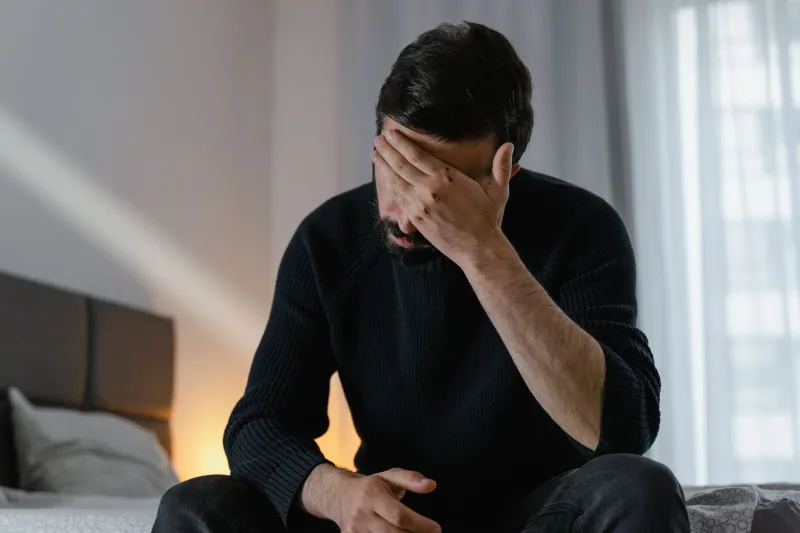
For many men, the bedroom becomes a boardroom — a place where performance is evaluated, outcomes are measured, and failure carries a weight that extends well beyond the moment itself. Sexual performance anxiety is not a character flaw or a sign of diminished masculinity. It is a clinically recognized phenomenon with roots in neurobiology, stress physiology, and learned psychological conditioning. At ErectileHyka, we believe that a complete understanding of men's sexual health must account for what happens above the shoulders just as much as below the waist.
The Hormonal Cascade: What Stress Actually Does to the Body
When a man experiences anticipatory anxiety before or during sexual activity, his body responds in precisely the same way it would to any perceived threat. The hypothalamic-pituitary-adrenal (HPA) axis activates, triggering the release of cortisol and adrenaline — the body's primary stress hormones. This is the classic fight-or-flight response, and while it is extraordinarily useful when you need to avoid danger, it is profoundly counterproductive in an intimate setting.
Cortisol, in elevated concentrations, suppresses the parasympathetic nervous system — the division of the autonomic nervous system responsible for facilitating erection. Sexual arousal and erection are fundamentally parasympathetic events. They require the body to be in a state of relative calm, allowing nitric oxide to be released into penile vascular tissue, causing smooth muscle relaxation and increased blood flow. When cortisol floods the system, this process is chemically obstructed. The result is not psychological weakness — it is straightforward physiology working exactly as designed, just in the wrong context.
Additionally, elevated adrenaline causes vasoconstriction — the narrowing of blood vessels — which directly counteracts the vasodilation needed for a firm erection. A man experiencing performance anxiety may be entirely willing and emotionally engaged, yet his body is physiologically incapable of responding as he intends.
The Feedback Loop: How One Bad Experience Becomes a Pattern
Perhaps the most clinically significant aspect of performance anxiety is its self-perpetuating nature. Psychologists refer to this as a negative feedback loop, and it is one of the primary reasons that isolated incidents of erectile difficulty can evolve into chronic dysfunction.
The sequence typically unfolds as follows: A man experiences difficulty achieving or maintaining an erection — perhaps due to fatigue, alcohol, or situational stress. Rather than attributing this to a transient cause, he begins to monitor himself during subsequent encounters. This self-monitoring, sometimes called "spectatoring" in the clinical literature (a term introduced by sex researchers Masters and Johnson), shifts his cognitive focus away from the sensory experience of intimacy and toward an internal performance audit. He is no longer present in the moment; he is watching himself from a distance, evaluating, anticipating failure.
This hypervigilance re-activates the HPA axis, cortisol rises again, and the erection falters — confirming his fear and reinforcing the expectation that it will happen again. Over time, the mere anticipation of sexual activity can trigger the anxiety response, creating a conditioned association between intimacy and threat.
Cognitive Behavioral Therapy: Restructuring the Mental Architecture
Cognitive Behavioral Therapy (CBT) has accumulated a substantial body of evidence as an effective intervention for performance anxiety. Unlike pharmaceutical approaches, CBT targets the cognitive distortions and maladaptive thought patterns that sustain the anxiety cycle.
Core CBT techniques applicable to sexual performance anxiety include:
- Cognitive restructuring: Identifying and challenging catastrophic thoughts ("If I lose my erection, the relationship is over") and replacing them with evidence-based alternatives.
- Behavioral experiments: Gradually engaging in intimate activities without the expectation of intercourse, reducing the performance pressure associated with specific outcomes.
- Psychoeducation: Understanding the physiological mechanisms described above so that a temporary difficulty is correctly interpreted as a normal stress response rather than evidence of permanent dysfunction.
A 2021 review published in the Journal of Sexual Medicine found that CBT interventions produced significant improvements in erectile function scores among men with psychogenic erectile dysfunction, with effects comparable to phosphodiesterase type-5 (PDE5) inhibitors in men whose primary etiology was psychological rather than vascular.
Mindfulness as a Clinical Tool
Mindfulness-based interventions have gained considerable traction in sexual health research over the past decade. The clinical rationale is straightforward: mindfulness practices train the brain to maintain present-moment awareness and reduce the ruminative thinking that characterizes spectatoring.
Regular mindfulness meditation — even as little as 10 to 15 minutes daily — has been shown to reduce baseline cortisol levels and decrease amygdala reactivity, the brain region most associated with fear and threat appraisal. When applied specifically to sexual contexts through a practice called Mindfulness-Based Sex Therapy (MBST), men learn to redirect attention from evaluative self-monitoring back to physical sensation and emotional connection.
Diaphragmatic breathing exercises, practiced consistently, also activate the parasympathetic nervous system directly, counteracting the physiological effects of anxiety in real time. This is a concrete, pharmacologically-free tool that men can deploy in the moment.
Integrating Mental and Pharmaceutical Approaches
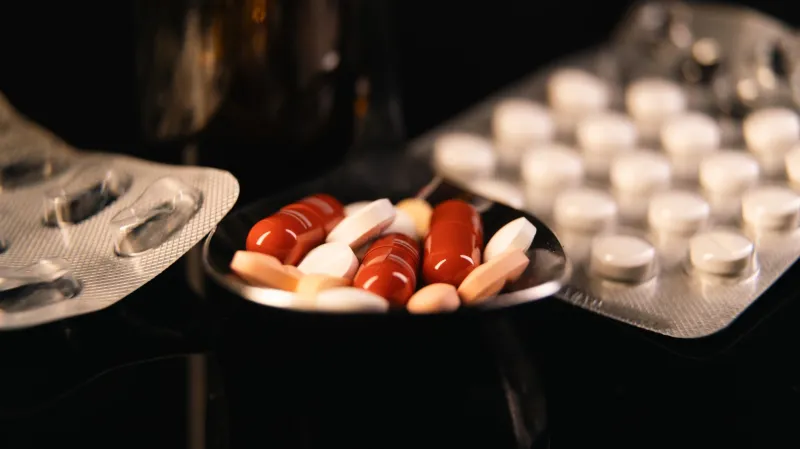
It is important to note that psychological and pharmaceutical interventions are not mutually exclusive — and for many men, the most effective treatment plan incorporates both. PDE5 inhibitors such as sildenafil or tadalafil can provide the physiological support needed to break the negative feedback loop, allowing a man to experience successful sexual encounters that begin to dismantle the conditioned fear response. Meanwhile, CBT and mindfulness address the cognitive architecture that sustains the anxiety, with the goal of reducing dependence on medication over time.
Men experiencing performance anxiety are strongly encouraged to discuss their symptoms openly with a licensed healthcare provider or a sex therapist certified by the American Association of Sexuality Educators, Counselors and Therapists (AASECT). A comprehensive assessment can distinguish between psychogenic and organic causes of erectile difficulty — a distinction that has significant implications for treatment planning.
The Bottom Line
Sexual performance anxiety is a legitimate medical and psychological concern, not a personal failing. The neurobiological mechanisms that drive it are well-characterized, and the evidence-based interventions available to address it are increasingly robust. At ErectileHyka, we consistently advocate for a whole-person approach to men's sexual health — one that treats the mind and the body as the integrated system they genuinely are. Recognizing that your brain may be your most significant obstacle is not a defeat; it is the beginning of an informed and effective path forward.