The Heart-Erection Connection: How Erectile Function Serves as a Barometer for Cardiovascular Health
In clinical medicine, the body rarely sends its warning signals through channels we expect. Cardiovascular disease — the leading cause of death among American men — is notorious for developing silently over years before manifesting as a heart attack or stroke. Yet accumulating research suggests that for many men, the cardiovascular system does send an early message. It simply arrives through an unexpected messenger: erectile function.
At ErectileHyka, we view sexual health not as an isolated domain but as an integrated component of total male wellness. The evidence linking erectile dysfunction (ED) to cardiovascular disease (CVD) is now substantial enough that leading cardiologists and urologists are calling for a fundamental shift in how both conditions are screened and managed.
Shared Biology: Why the Penis and the Heart Are More Alike Than You Think
The connection between erectile function and cardiovascular health is not metaphorical — it is mechanistic. Both erection and cardiac perfusion depend on the same fundamental process: healthy vascular endothelial function.
The endothelium is the thin layer of cells lining every blood vessel in the body. When functioning optimally, endothelial cells produce nitric oxide (NO), a signaling molecule that causes smooth muscle relaxation and vasodilation — the widening of blood vessels that allows blood to flow freely. This process is central to erection: when a man becomes sexually aroused, nitric oxide triggers relaxation of the smooth muscle within the corpora cavernosa of the penis, allowing the vascular spaces to fill with blood and produce rigidity.
Endothelial dysfunction — the impaired ability of the endothelium to produce and respond to nitric oxide — is now recognized as one of the earliest detectable markers of atherosclerosis, the arterial plaque buildup that underlies coronary artery disease, peripheral arterial disease, and stroke. When endothelial dysfunction begins to develop systemically, it affects all vascular beds. However, because the penile arteries are significantly smaller in diameter than the coronary arteries (approximately 1–2 mm versus 3–4 mm), they tend to manifest dysfunction earlier and more visibly.
This anatomical reality carries a profound clinical implication: erectile dysfunction may precede a cardiac event by three to five years, according to data published in the European Heart Journal. The penis, in a very literal physiological sense, may be sounding an alarm that the heart has not yet triggered.
The Epidemiological Evidence: Numbers That Demand Attention
The association between ED and cardiovascular risk is not merely theoretical — it is robustly supported by population-level data.
- A landmark meta-analysis published in JAMA Internal Medicine found that men with erectile dysfunction had a 44% increased risk of cardiovascular events compared to men without ED, after controlling for traditional risk factors such as hypertension, diabetes, and smoking.
- The Massachusetts Male Aging Study, one of the longest-running cohort studies of male sexual health in the US, found that ED was independently associated with increased all-cause mortality in middle-aged men.
- Research from the Mayo Clinic demonstrated that among men with no known cardiovascular disease, the presence of ED was associated with a two- to three-fold increase in the likelihood of a future major adverse cardiac event.
Perhaps most strikingly, studies have found that men who develop ED in their 40s carry a substantially higher cardiovascular risk profile than men who develop ED in their 70s — suggesting that early-onset ED warrants particularly aggressive cardiovascular screening.
Shared Risk Factors: The Overlapping Web
The conditions that damage vascular endothelium are the same conditions that drive both ED and cardiovascular disease. Understanding this overlap is essential for any comprehensive treatment strategy.
Hypertension: Chronically elevated blood pressure mechanically damages endothelial cells and accelerates atherosclerotic plaque formation. It is also independently associated with ED in multiple large studies.
Type 2 Diabetes: Hyperglycemia causes glycation of endothelial proteins and promotes oxidative stress, impairing NO production. Men with diabetes are two to three times more likely to develop ED than men without the condition, and they tend to develop it at a younger age.
Dyslipidemia: Elevated LDL cholesterol and low HDL cholesterol contribute to plaque formation in arterial walls. Statin therapy, which reduces LDL and has anti-inflammatory endothelial effects, has been shown in some studies to modestly improve erectile function.
Obesity: Adipose tissue, particularly visceral fat, produces inflammatory cytokines that impair endothelial function and suppress testosterone production — compounding both cardiovascular and sexual health risk.
Smoking: Nicotine and carbon monoxide cause direct endothelial injury and vasospasm. Smoking cessation has been associated with measurable improvements in erectile function within months.
Sedentary lifestyle: Physical inactivity is independently associated with endothelial dysfunction, reduced NO bioavailability, and increased cardiovascular risk.
The Case for Interdisciplinary Collaboration
Despite the strength of the evidence, the clinical response to the ED-CVD connection has been inconsistent. Primary care physicians, cardiologists, and urologists frequently operate in relative silos, with sexual health concerns often receiving insufficient attention in cardiovascular risk assessments and vice versa.
Leading medical organizations are beginning to close this gap. The American College of Cardiology and the American Heart Association have both acknowledged ED as a cardiovascular risk marker in recent guidelines. The Princeton Consensus Conference — a multidisciplinary expert panel — has published detailed recommendations for cardiovascular risk stratification in men presenting with ED, stratifying patients into low, intermediate, and high-risk categories to guide both treatment and further evaluation.
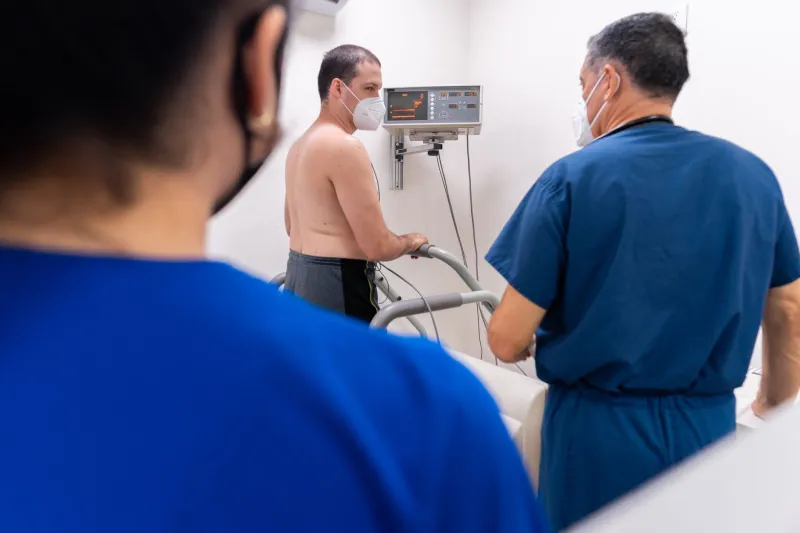
The practical implication for any man presenting with new-onset erectile dysfunction — particularly in the absence of an obvious psychological cause — is that a cardiovascular workup may be as clinically appropriate as a urological evaluation. Blood pressure measurement, fasting lipid panel, fasting glucose, and body mass index assessment represent a minimum baseline. Men with intermediate or high cardiovascular risk profiles may warrant stress testing or advanced imaging.
Lifestyle Interventions That Serve Both Systems Simultaneously
One of the most encouraging aspects of the ED-CVD connection is that lifestyle modifications shown to benefit cardiovascular health also demonstrate measurable improvements in erectile function — creating a compelling dual incentive for behavioral change.
- Aerobic exercise: A meta-analysis in the Journal of Sexual Medicine found that regular moderate-to-vigorous aerobic exercise (approximately 40 minutes, four times per week) produced significant improvements in erectile function scores, with effects most pronounced in men with cardiovascular risk factors.
- Mediterranean dietary pattern: Adherence to a Mediterranean-style diet — rich in vegetables, legumes, whole grains, fish, and olive oil — has been associated with reduced cardiovascular events and improved erectile function in multiple observational studies.
- Weight reduction: Even modest weight loss (5–10% of body weight) in overweight men has been shown to improve erectile function scores, likely through improvements in endothelial function, testosterone levels, and blood pressure.
- Smoking cessation: As noted above, quitting smoking benefits both vascular systems within a clinically meaningful timeframe.
What This Means for Men Reading This Today
If you are experiencing erectile difficulties — particularly if you are under 60, have not been evaluated for cardiovascular risk factors recently, or have a family history of heart disease — the appropriate response is not only to consider ED treatment options, but to treat the symptom as a potential signal worth investigating.
This is not cause for alarm. It is cause for action. A conversation with your primary care physician or a cardiologist, framed around both sexual health and cardiovascular risk, could prove to be one of the most consequential medical conversations you have. The body communicates in the language it has available. When it comes to vascular health in men, erectile function may be among the most eloquent dialects it speaks.